Nashville's humid subtropical climate brings hot summers that expand pipes and cool winters that contract them, stressing older galvanized and cast-iron lines common in Germantown and East Nashville homes built before 1960. These temperature swings combined with Davidson County's clay-heavy soils that shift during heavy rains often create micro-fractures in slab plumbing that go unnoticed until moisture reaches finished floors. Technicians must account for the rolling terrain near Centennial Park and The Gulch where drainage patterns push water toward foundations rather than away from them.
In Belle Meade and Green Hills, larger lots with mature landscaping hide access points, forcing use of non-invasive methods to trace lines under driveways and patios without disturbing established trees. Downtown high-rises and West End condos present different challenges with shared risers and limited shutoff access, requiring coordination with building management before any pressure testing begins. Homeowners in Donelson frequently see leaks where original 1950s plumbing meets newer additions, creating mixed-material joints that corrode faster under constant humidity.
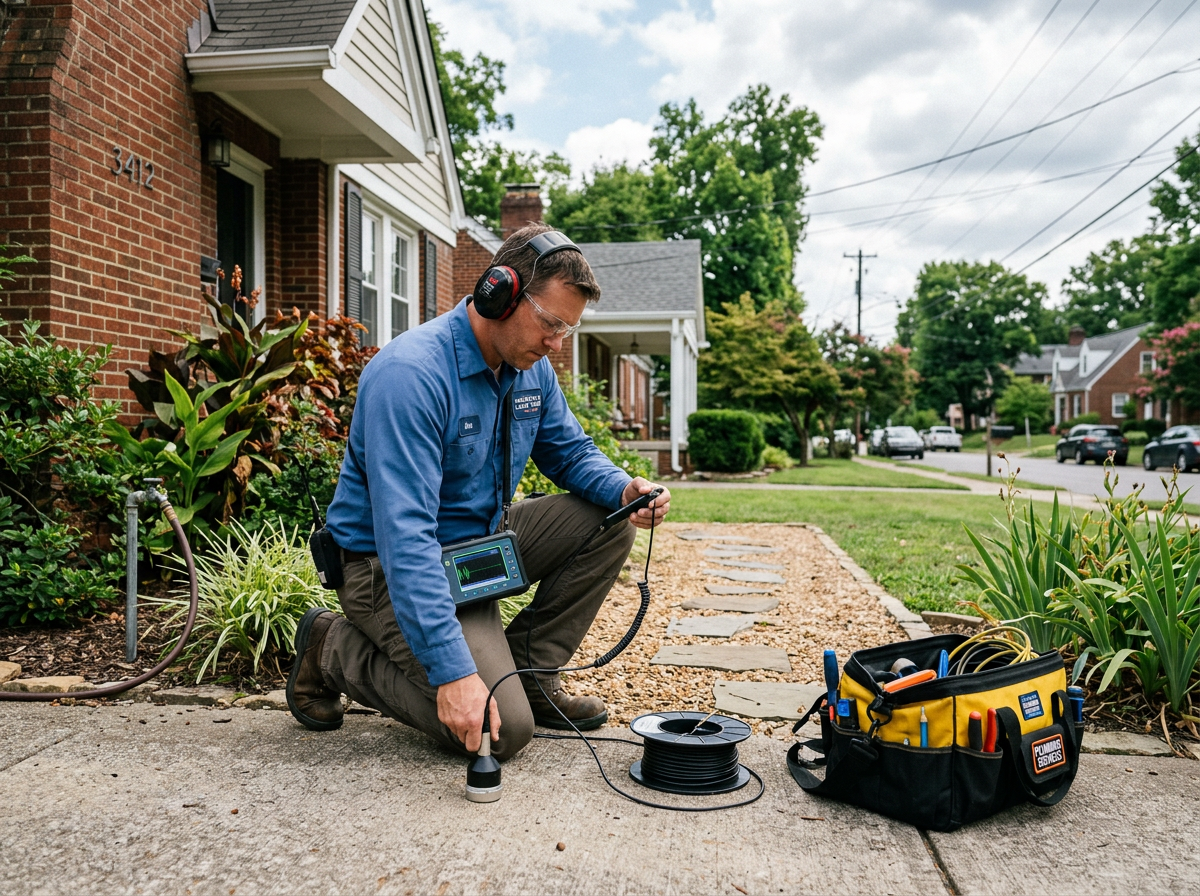
Electronic listening equipment and thermal cameras become essential when acoustic signals are masked by traffic noise near Bridgestone Arena or the constant foot traffic around the Ryman Auditorium and Grand Ole Opry. Soil moisture from summer thunderstorms can mask small leaks until they reach carpet or hardwood, so mapping moisture gradients across the slab is standard before any concrete removal is recommended.
Technician insight
In Nashville the thing that catches most people out with leak detection is assuming the leak is under the slab when it's actually at a mixed-material joint where 1950s cast iron meets newer PEX in East Nashville additions. Clay soil expansion after a cool winter rain pushes those joints just enough to start weeping, and the moisture travels along the slab edge before showing up inside. Checking the transition points first saves a lot of unnecessary concrete work.
Hidden Slab Leak in Germantown Bungalow
A homeowner noticed rising water bills and damp carpet near an exterior wall. Pressure testing isolated the issue to the main supply line under the 1948 slab. Acoustic sensors pinpointed the leak at a corroded galvanized elbow near the front porch. The line was rerouted through an exterior wall, avoiding slab removal and restoring normal pressure within two days.
Leak Detection Services We Offer
✓Slab Leak Detection
Uses acoustic sensors and pressure testing to locate leaks under concrete slabs common in East Nashville and Germantown without unnecessary demolition.
✓Electronic Pipe Tracing
Maps water line routes through yards and under driveways in Belle Meade and Green Hills where landscaping blocks visual access.
✓Thermal Imaging Inspection
Detects temperature differences caused by escaping water in West End and Downtown properties where walls and floors limit direct access.
✓Video Camera Line Inspection
Inspects interior pipe conditions in older Donelson and Green Hills homes to identify corrosion or joint failures before they become slab leaks.
✓Moisture Mapping
Charts moisture movement across slabs and crawl spaces after heavy rains typical in Davidson County to isolate active leak zones.
Leak Detection Cost in Tennessee
| Service | Typical Range | What Affects It |
|---|---|---|
| Initial Leak Detection Visit | $275–$475 | Higher in Belle Meade and Green Hills due to lot size and landscaping. |
| Full Slab Scan with Thermal and Acoustic Tools | $450–$750 | Includes multiple zones in older East Nashville or Germantown homes. |
| Video Camera Inspection Add-On | $175–$325 | Added when interior drain lines are suspected. |
| Moisture Mapping After Heavy Rain | $225–$375 | Common request in Donelson and areas with poor drainage. |
Ranges are typical for Tennessee and confirmed with an exact written quote before any work starts.
How it works
- 1
Initial Assessment
Review water bill history and visible signs while walking the property to identify likely leak zones based on neighborhood plumbing age.
- 2
Non-Invasive Testing
Apply pressure tests and acoustic equipment to narrow the leak location without cutting floors or walls.
- 3
Confirmation and Mapping
Use thermal or camera tools to confirm the exact line and document access points for repair planning.
- 4
Report and Recommendation
Provide a written summary of findings with repair options tailored to the home's construction and lot conditions.
Pricing
Pricing varies by property access, number of lines tested, and whether excavation is needed for confirmation.