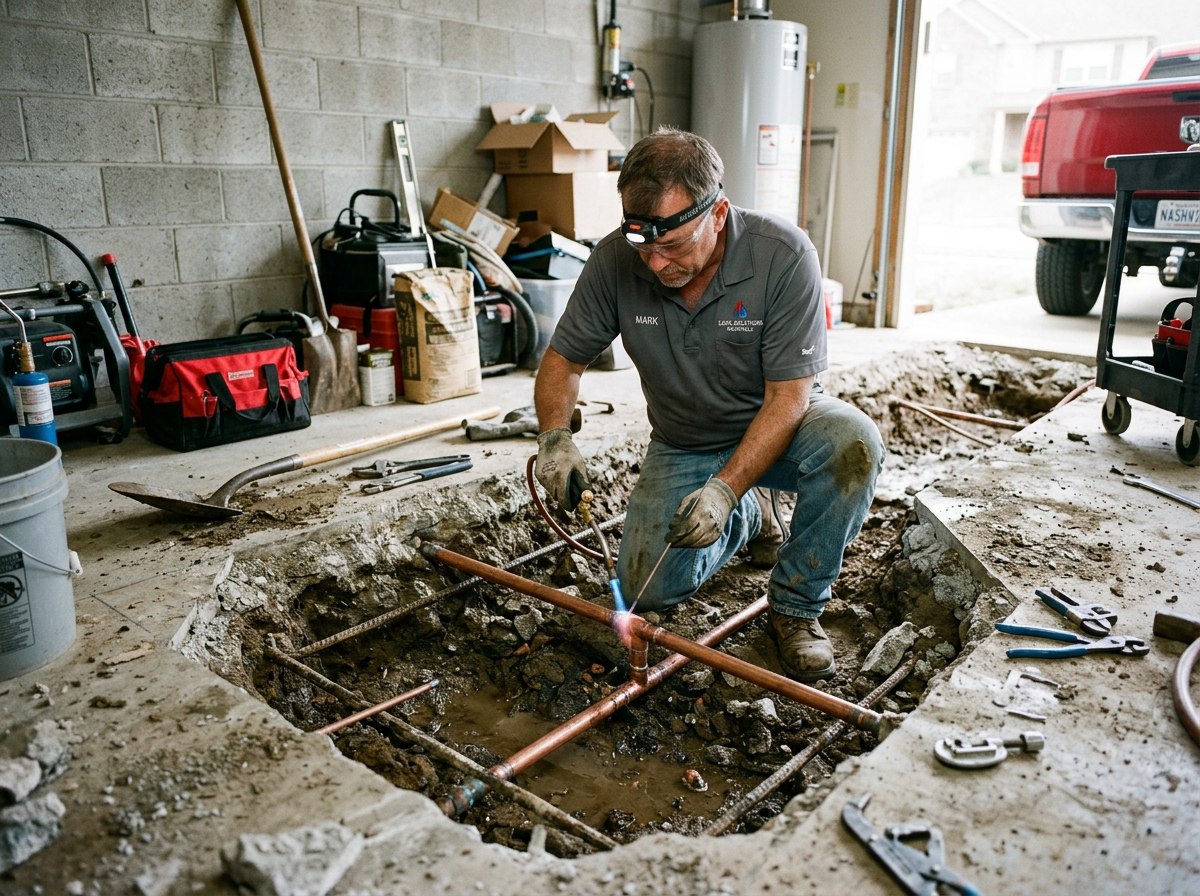
Nashville's humid subtropical climate drives repeated soil expansion and contraction around concrete slabs, especially in older homes built before the 1980s in Germantown and East Nashville. These movements stress supply lines and waste pipes, creating pinhole leaks that often go unnoticed until moisture reaches finished flooring or baseboards. Detection must account for the dense clay soils common across Davidson County that retain water and mask sound travel during acoustic testing.
Many West End and Belle Meade properties sit on sloped lots where poor drainage funnels runoff toward foundations, accelerating corrosion on copper and galvanized lines embedded in slabs. Technicians routinely combine pressure testing with thermal imaging to isolate leaks without unnecessary demolition. In The Gulch and Downtown high-rises converted from older stock, access limitations require smaller equipment and careful coordination with building management to avoid disrupting shared utilities.
Repair choices depend on pipe material and leak location. Epoxy lining works well for straight runs in Green Hills ranch homes, while full excavation becomes necessary when multiple joints fail near Donelson. Homeowners should expect at least one follow-up visit to confirm pressure holds after backfill, since seasonal temperature swings can reopen marginal seals if the original soil compaction is not restored.
Technician insight
In Nashville the thing that catches most people out with slab leak repair is how the dense clay soil around older East Nashville and Donelson homes holds moisture and hides the true extent of the leak until you excavate. Homeowners often assume a single pinhole when the real issue is joint failure from decades of seasonal movement.
Germantown Bungalow Slab Leak
A homeowner noticed warm spots on tile near the kitchen. Electronic detection traced the leak to a 1970s copper supply line under the slab. We isolated the section, installed epoxy lining through two small access points, and restored pressure without removing the original flooring.
Slab Leak Repair Services We Offer
✓Electronic Leak Detection
Uses frequency generators and receivers to trace leaks through concrete without cutting floors in Nashville's older slab homes.
✓Thermal Imaging Inspection
Identifies temperature differentials caused by escaping water under slabs common in East Nashville and Germantown properties.
✓Pressure Testing and Isolation
Segments plumbing zones to pinpoint leaks while minimizing disruption to occupied homes in Green Hills and Belle Meade.
✓Epoxy Pipe Lining
Applies interior coating to seal pinholes in supply lines without major excavation in Davidson County residences.
✓Targeted Slab Excavation
Removes and replaces damaged sections when lining is not viable, restoring proper compaction in clay-heavy Nashville soils.
Slab Leak Repair Cost in Tennessee
| Service | Typical Range | What Affects It |
|---|---|---|
| Electronic Or Thermal Detection | $275–$650 | Higher in multi-story or finished-basement homes common in Green Hills |
| Epoxy Lining Repair | $1,800–$3,400 | Varies with pipe length and number of bends in older Germantown slabs |
| Targeted Excavation And Replacement | $2,200–$4,800 | Increases with concrete thickness and restoration of landscaping or flooring |
| Follow-Up Pressure Test | $150–$300 | Often included when scheduled with initial repair |
Ranges are typical for Tennessee and confirmed with an exact written quote before any work starts.
How it works
- 1
Site Assessment
Review plumbing history and visible moisture patterns in the specific Nashville neighborhood.
- 2
Non-Invasive Detection
Deploy acoustic, electronic, or thermal tools to locate the leak while preserving finished surfaces.
- 3
Access And Repair
Create minimal openings or apply lining based on pipe condition and leak severity.
- 4
Restoration And Verification
Backfill, compact soil, and retest pressure to confirm the repair holds through seasonal changes.
Pricing
Upfront quotes reflect detection method, access difficulty, and whether excavation or lining is required in Nashville's varied housing stock.