2026-09-04 · Mark Donovan
What Is a Slab Leak? The Signs Under Your Foundation
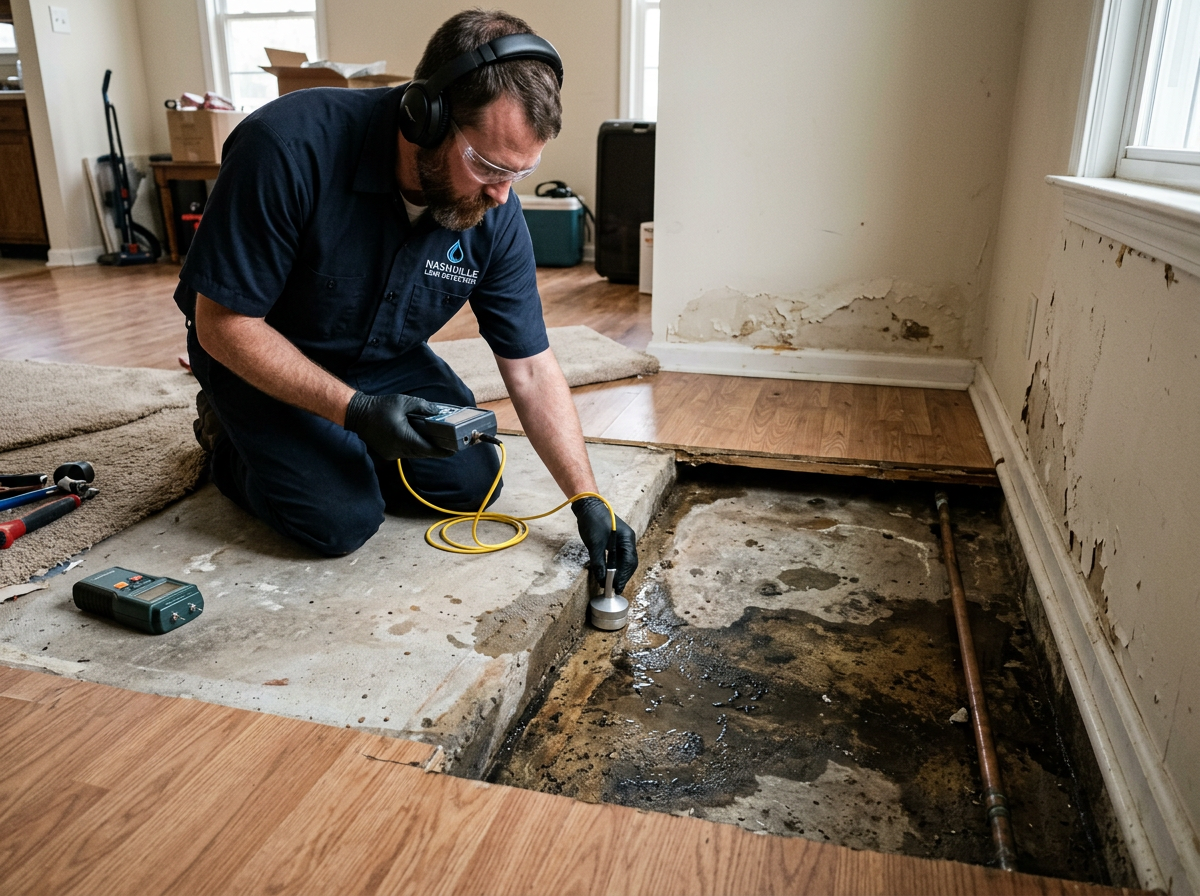
A slab leak is a breach in water supply piping routed directly under a poured concrete foundation, most often from corrosion, soil movement, or thermal stress on copper or galvanized lines. In Nashville, these leaks typically appear after 15–25 years in homes built before the mid-1990s, especially in East Nashville and Germantown where original plumbing remains in place.
Defining a Slab Leak
A slab leak occurs when pressurized hot or cold lines lose integrity beneath the slab, sending water into the soil or against the concrete. The humid subtropical climate of Davidson County drives repeated expansion and contraction cycles; hot summers push pipe joints while cool winters allow contraction that can open small pinholes. Older neighborhoods such as The Gulch and West End contain many 1940s–1960s homes with rigid copper runs that have already reached typical service life. Soil in the region contains pockets of expansive clay that shift after heavy spring rains, placing lateral stress on fittings. Because the leak stays hidden, residents often notice only secondary effects like unexplained increases in the monthly bill or warm spots on flooring. Accurate identification requires listening equipment or pressure testing rather than random excavation.
Common Signs Under the Foundation
Homeowners in Belle Meade and Green Hills frequently report the same early indicators. A sudden spike of $30–$80 on the water bill with no change in usage points to continuous underground flow. Floors may feel warmer in one section when the heat is off, or carpet stays damp without visible roof leaks. Cracks wider than 1/8 inch appearing in tile or hardwood often trace back to moisture undermining the slab edge. In Donelson and Hermitage, where slabs sit closer to the water table, a persistent musty odor near baseboards signals trapped vapor. Another reliable clue is the sound of running water when all fixtures are off; this can be confirmed by watching the meter dial for movement over a 30-minute period with the main valve closed.
How Local Conditions Affect Detection
Davidson County terrain includes rolling hills and variable fill dirt that channels water differently than flat lots. In Downtown and Germantown, narrow lots and shared utility easements limit exterior access, so technicians rely on acoustic sensors and thermal imaging to isolate the leak without cutting driveways. The same subtropical humidity that accelerates pipe corrosion also masks small leaks by keeping surrounding soil moist year-round. Homes near Centennial Park and the Parthenon often sit on older municipal lines that deliver higher static pressure, increasing leak volume once a breach forms. These factors make non-invasive methods essential before any concrete removal begins.
Practical Next Steps
Once signs appear, schedule a targeted slab leak detection visit that includes both acoustic and pressure testing. Review the meter still running with the water off to rule out fixture issues first. If results confirm a foundation leak, the next logical step is reviewing options outlined in how leak detection equipment pinpoints a leak without digging. For properties in areas like Madison or Old Hickory with similar construction, early professional assessment prevents the need for full slab replacement later.